News
Planning an Outdoor Bouldering trip?
If you’re like us and you can’t wait to plan your next trip, let us give you our tips and tricks for…
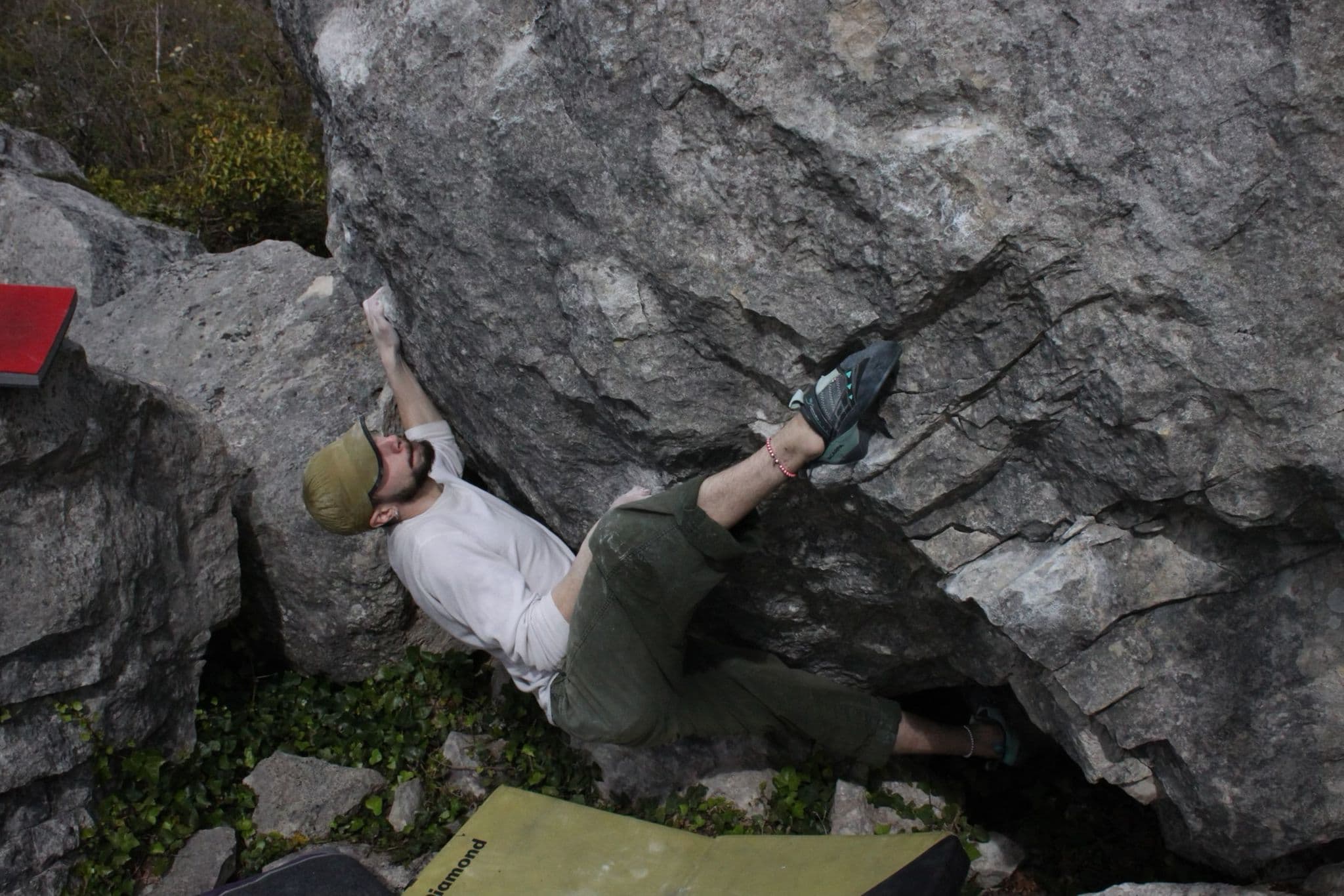
If you’re like us and you can’t wait to plan your next trip, let us give you our tips and tricks for sick sends!
In this blog we will look at locations, equipment needed, warm ups and general etiquette when climbing outdoors.
First of all, lets talk location!
We are so lucky to be so close to the South Coast, with it’s beautiful scenery, rich history and awesome climbing!
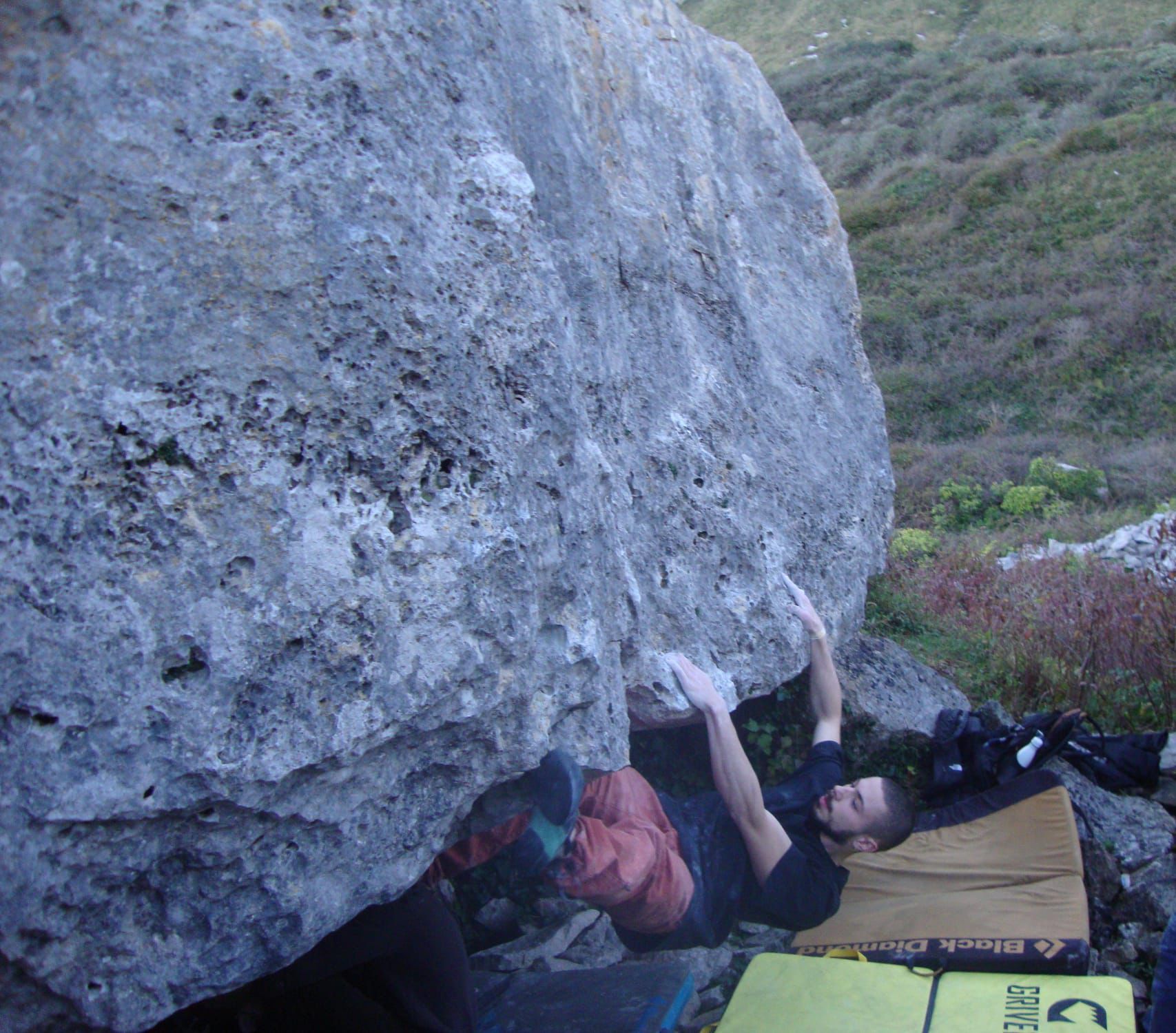
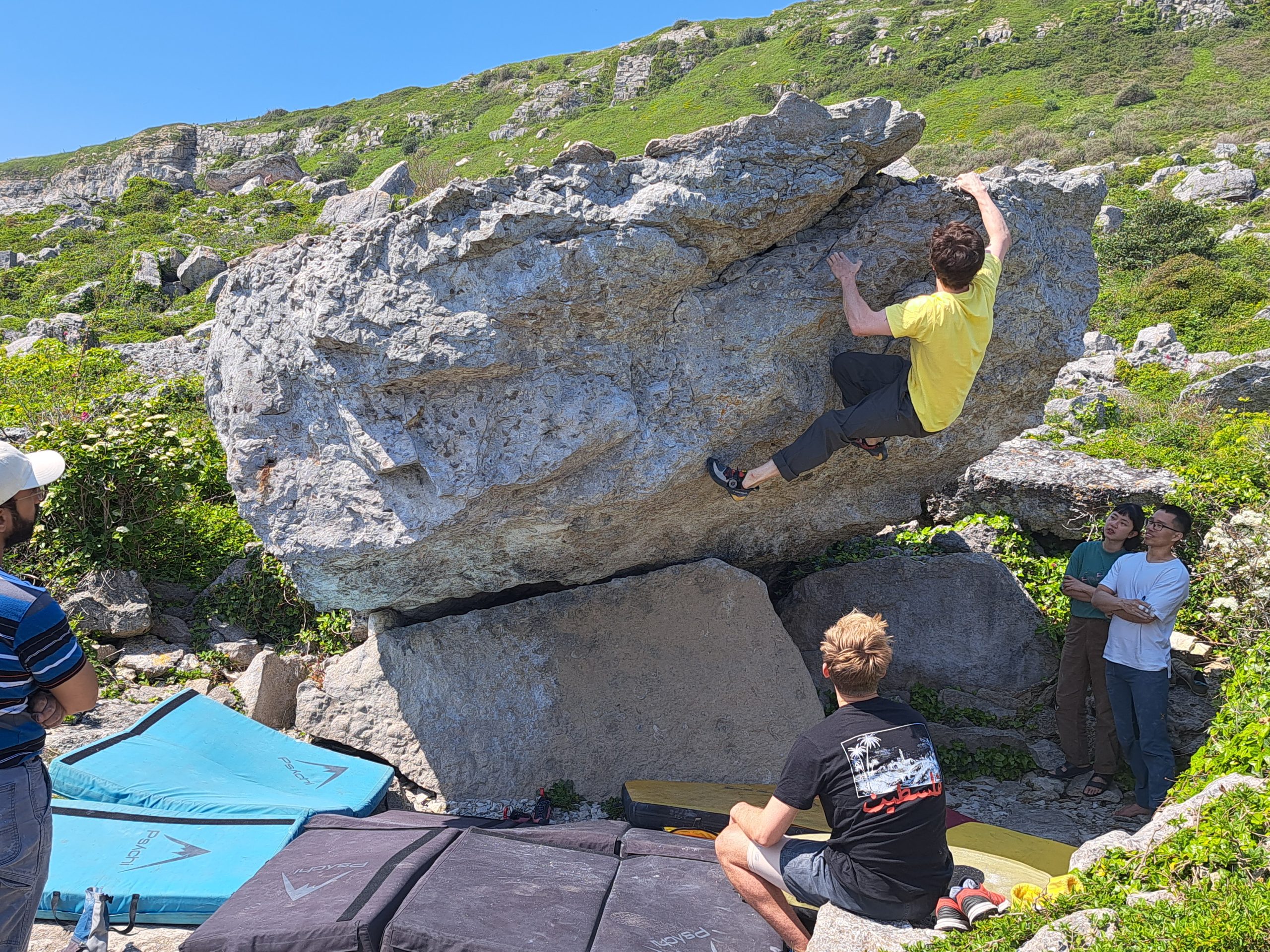
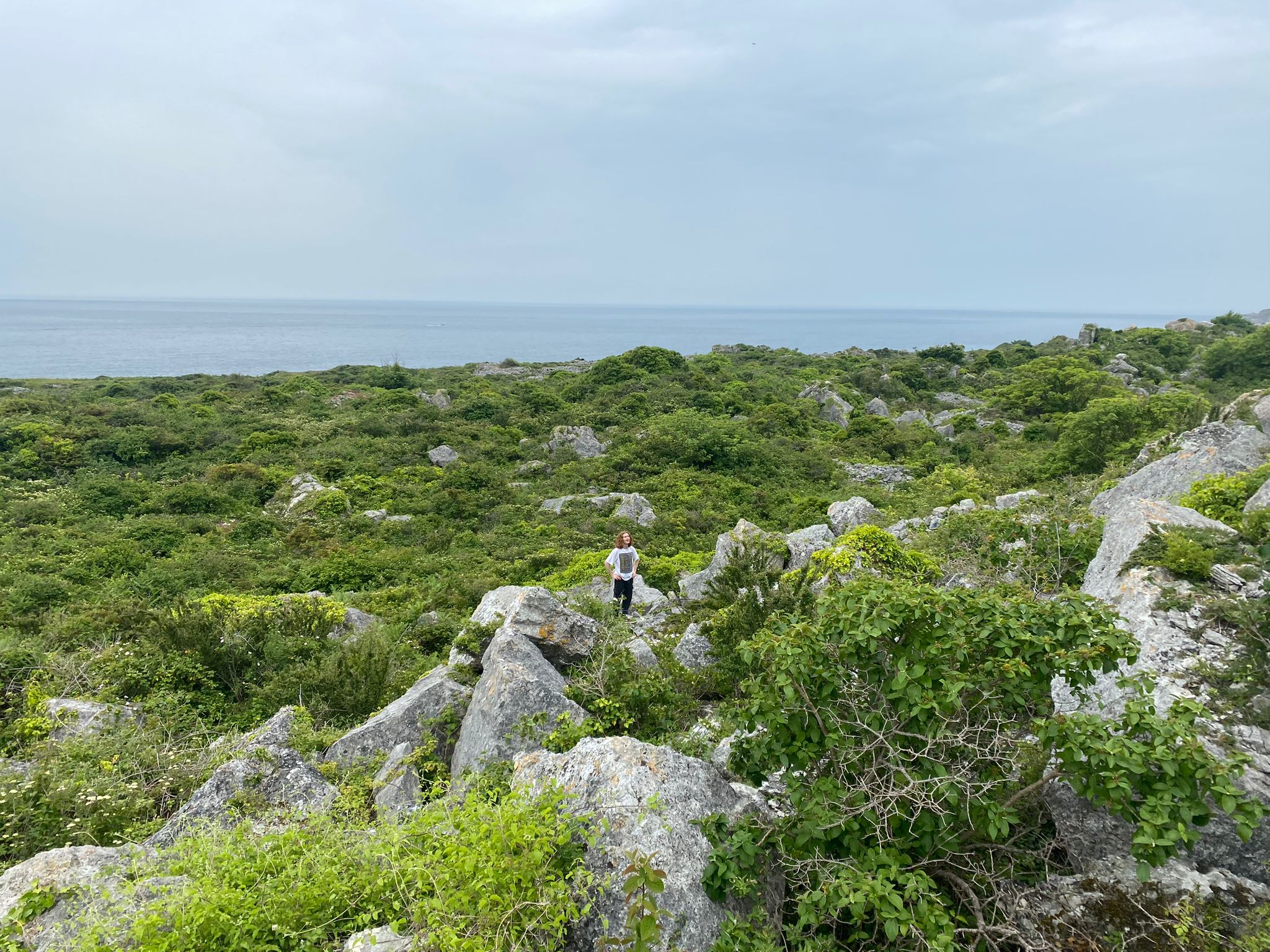
Cuttings Boulder Field, Portland – A classic! Filled with so much variety of boulders and grades. The boulders here are generally small in stature but make up for the lack of height by including sit starts on most routes. The Boulder Field can be hard to navigate, it is advised that you stay to paths where you can, the rocky terrain and thick bramble bushes can make it hard to go “off-piste”.
Conditions; winter is the best time to climb in the Boulder Field, the low humidity helps with grip as the rocks can be quite smooth textured. There is little to no shelter from the wind in the Boulder Field, but occasionally a cool summers day with a breeze can provide good conditions too.
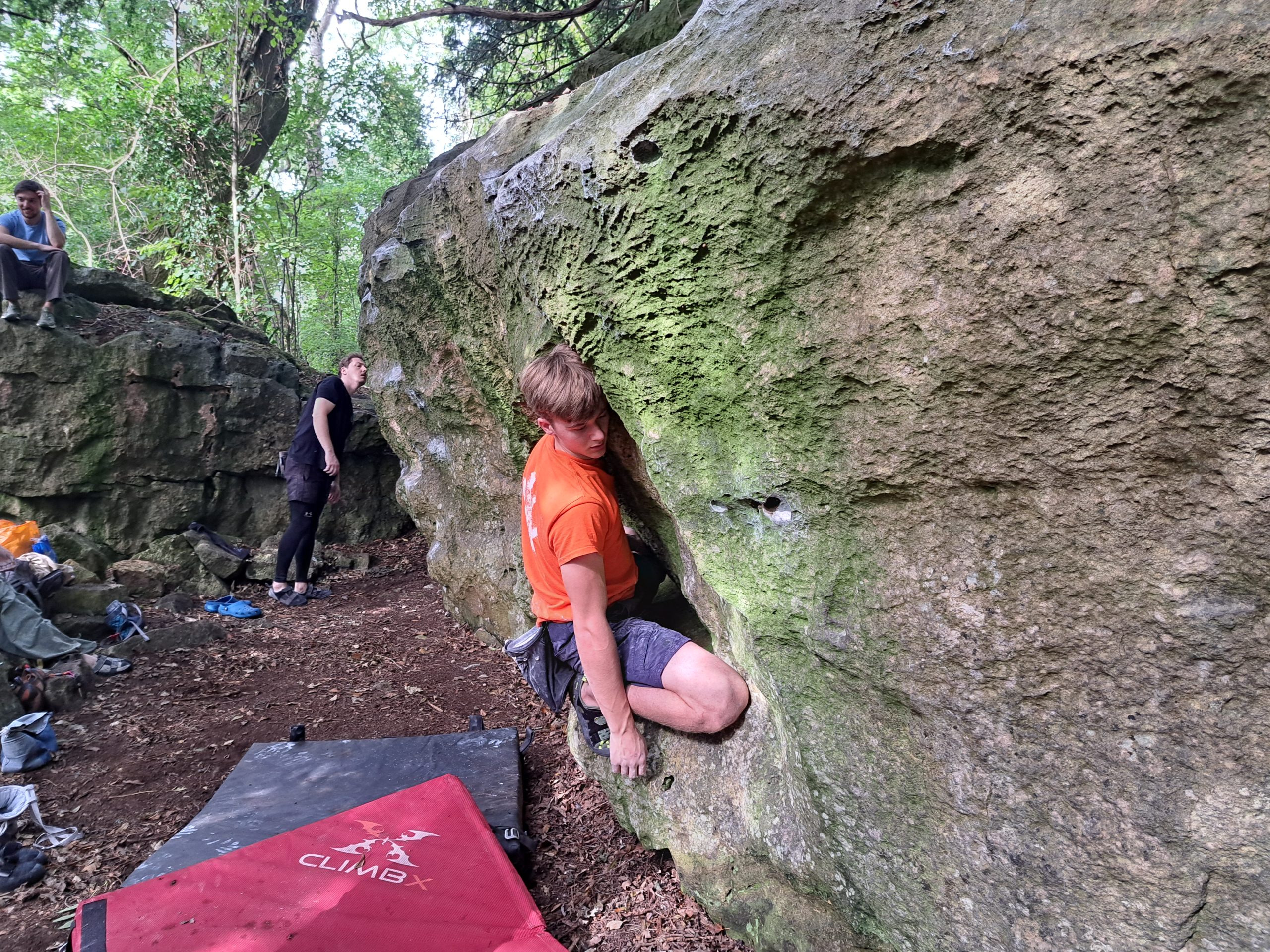
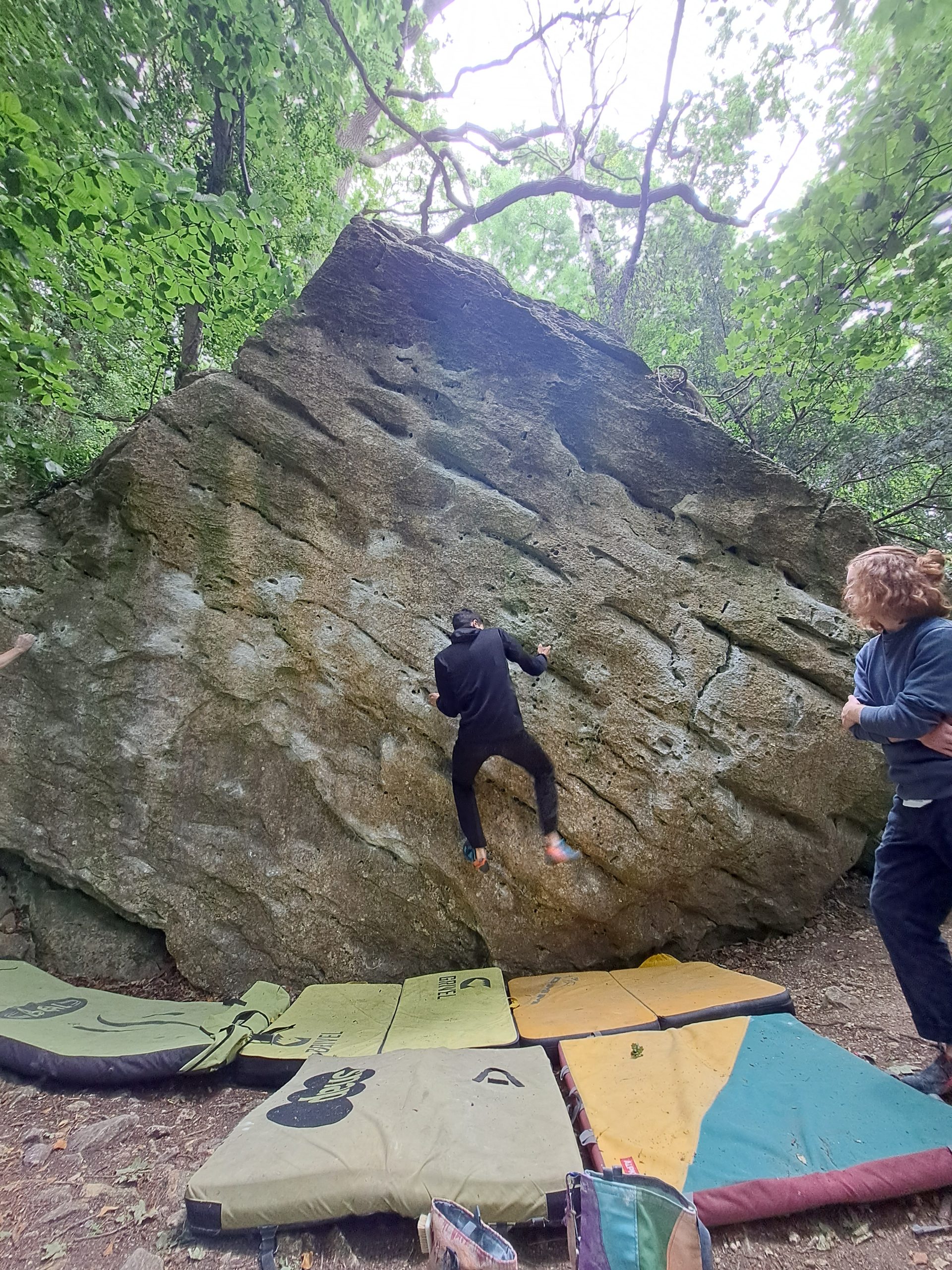
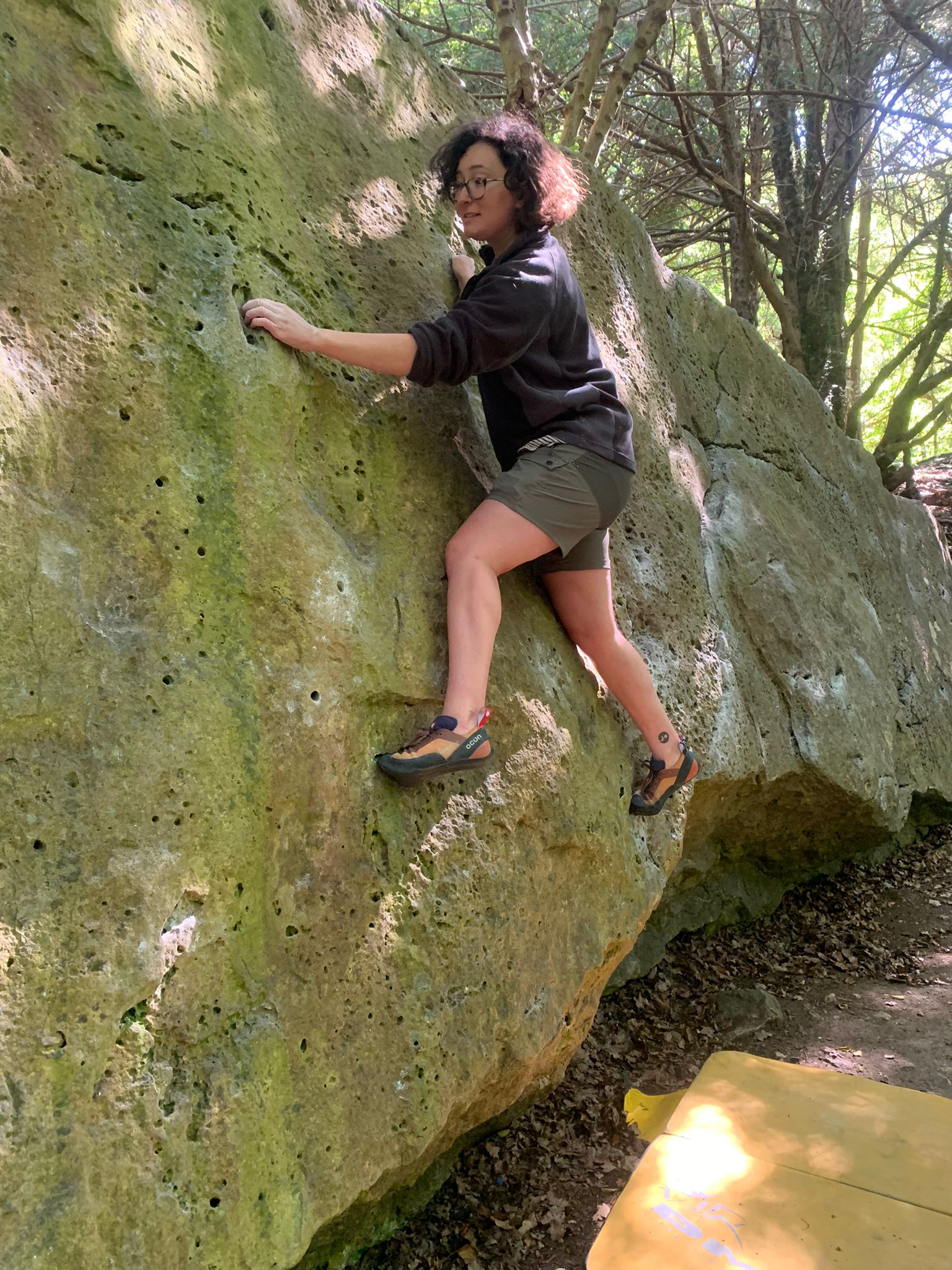
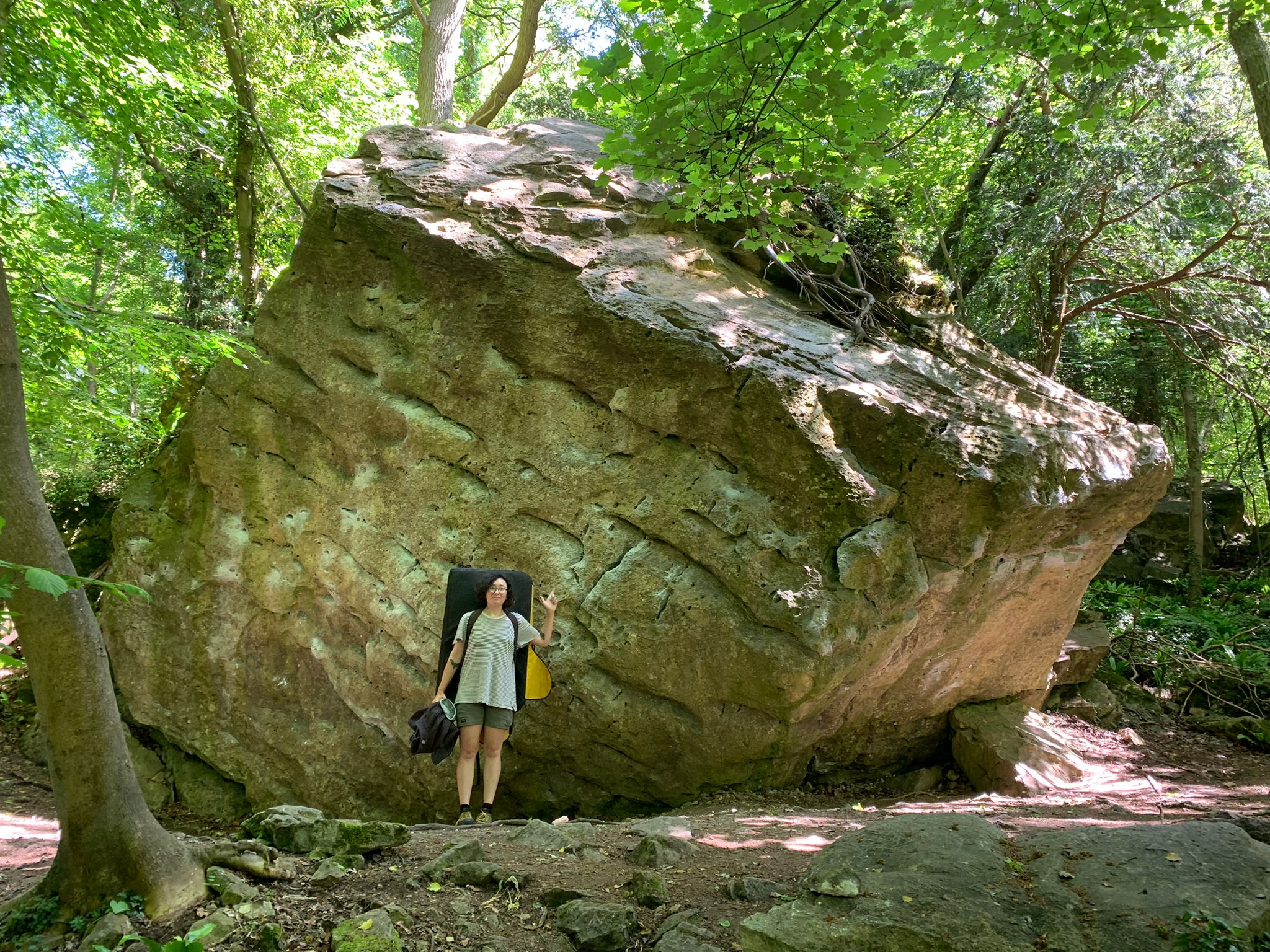
Sally in the Woods – A very different environment to the before mentioned rocky landscape. Sally’s is shrouded in shade as it is nestled in the woodland, the sun can break through the canopy but overall it’s a pretty shaded location. This in no way takes away from the enjoyment of climbing here, there is a massive range of boulders, slabs, high balls and everything in-between!
The stone at Sally’s is slightly softer, it is recommended that you do not brush them too much, make sure your climbing shoes are clean and use chalk responsibly. It is not suitable to climb when wet.
Conditions; best conditions are often found on a cool evening, best to wait a few days after any heavy rain to give the rock and ground a chance to dry out.
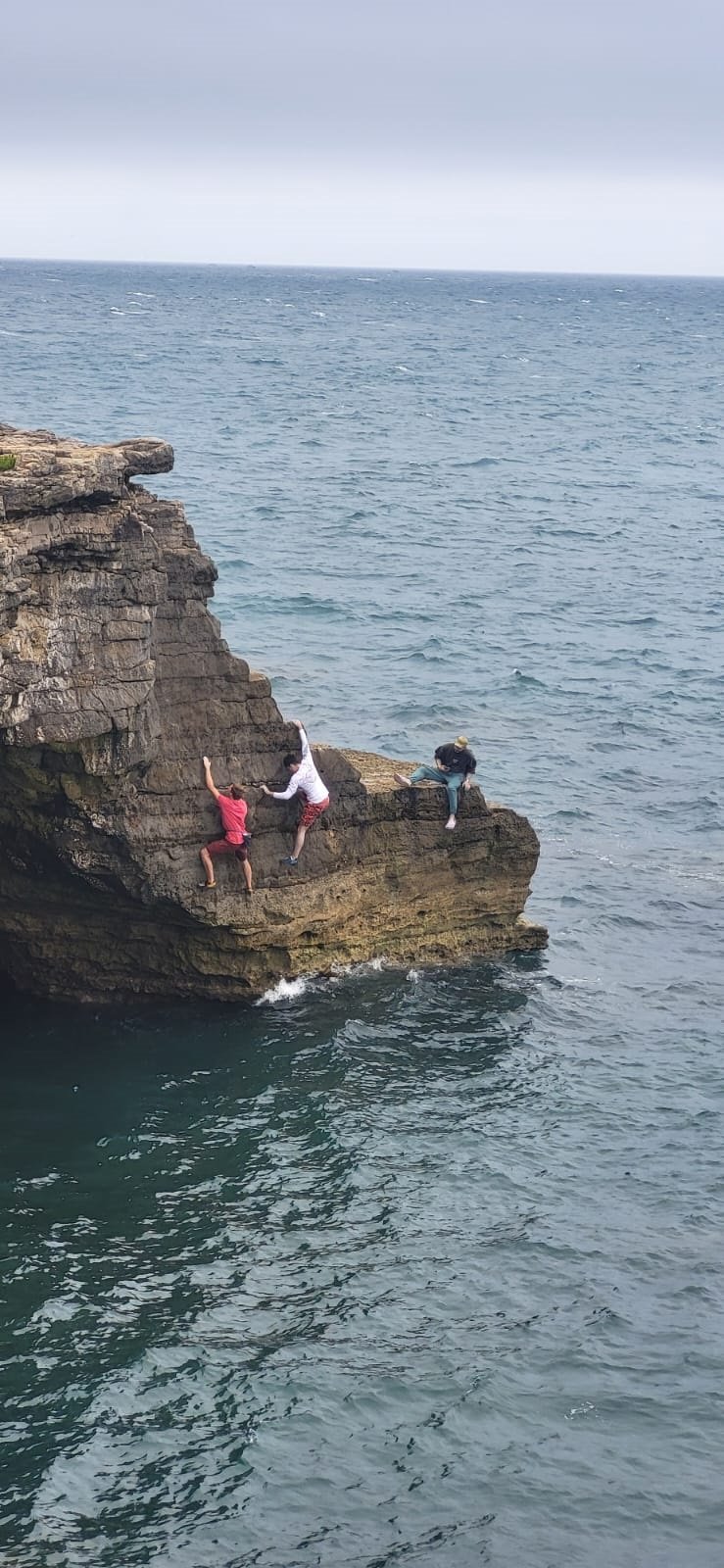
Lighthouse Area, Portland – This crag is situated right on the waters edge, making for some very exciting climbs and beautiful scenery. Lighthouse area has become a hub for Deep Water Soloing, although it is tidal so best to check if the water will be deep enough when you plan on visiting. Sector Pom Pom is a small bay area with some very interesting rock formation, the routes have been referred to as “extended boulder problems” and are mostly pretty steep.
Conditions; best to monitor the weather and tide times to plan your trip here, the rocks are being washed by the waves constantly so be aware of any collapsed areas.
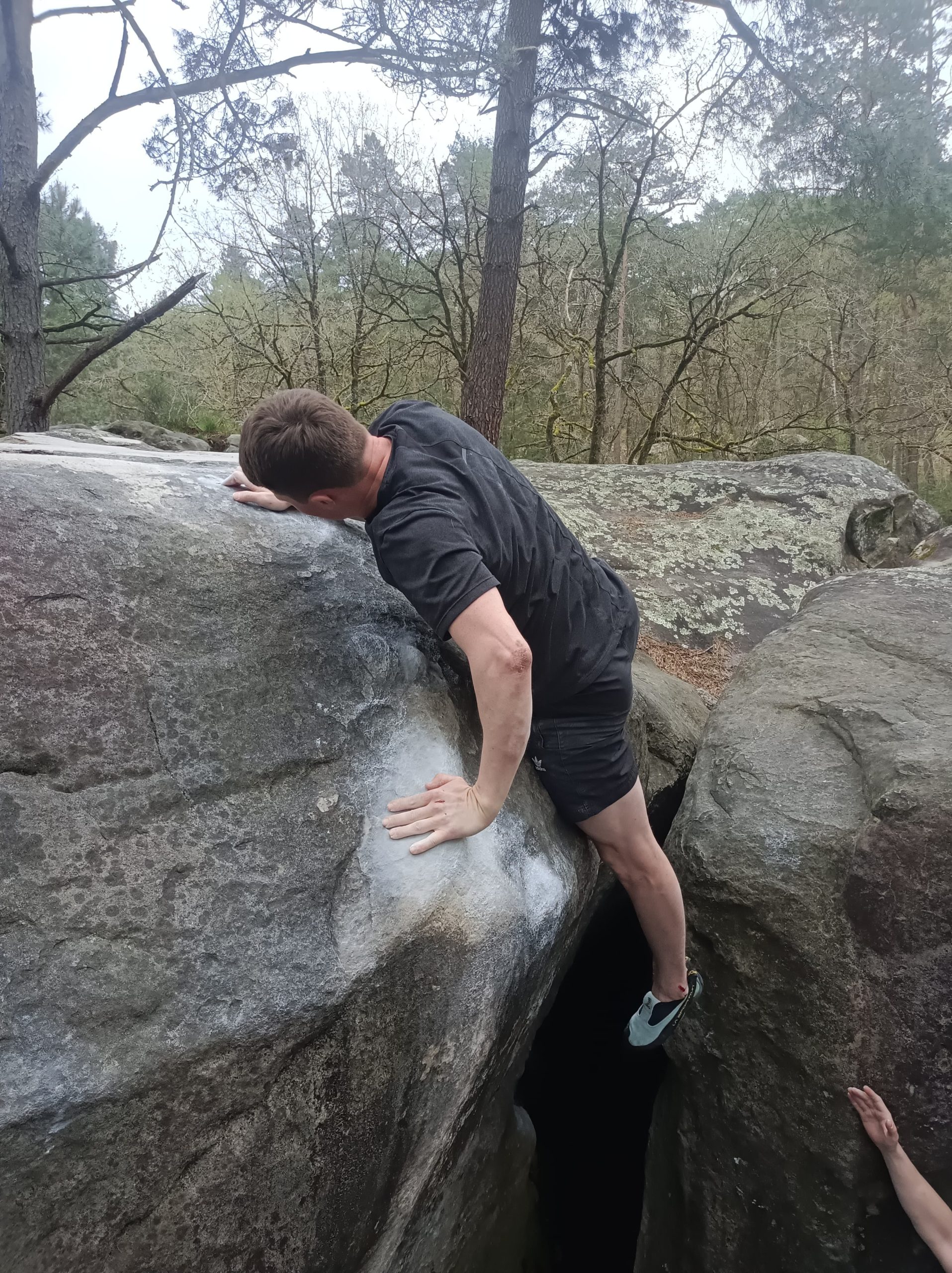
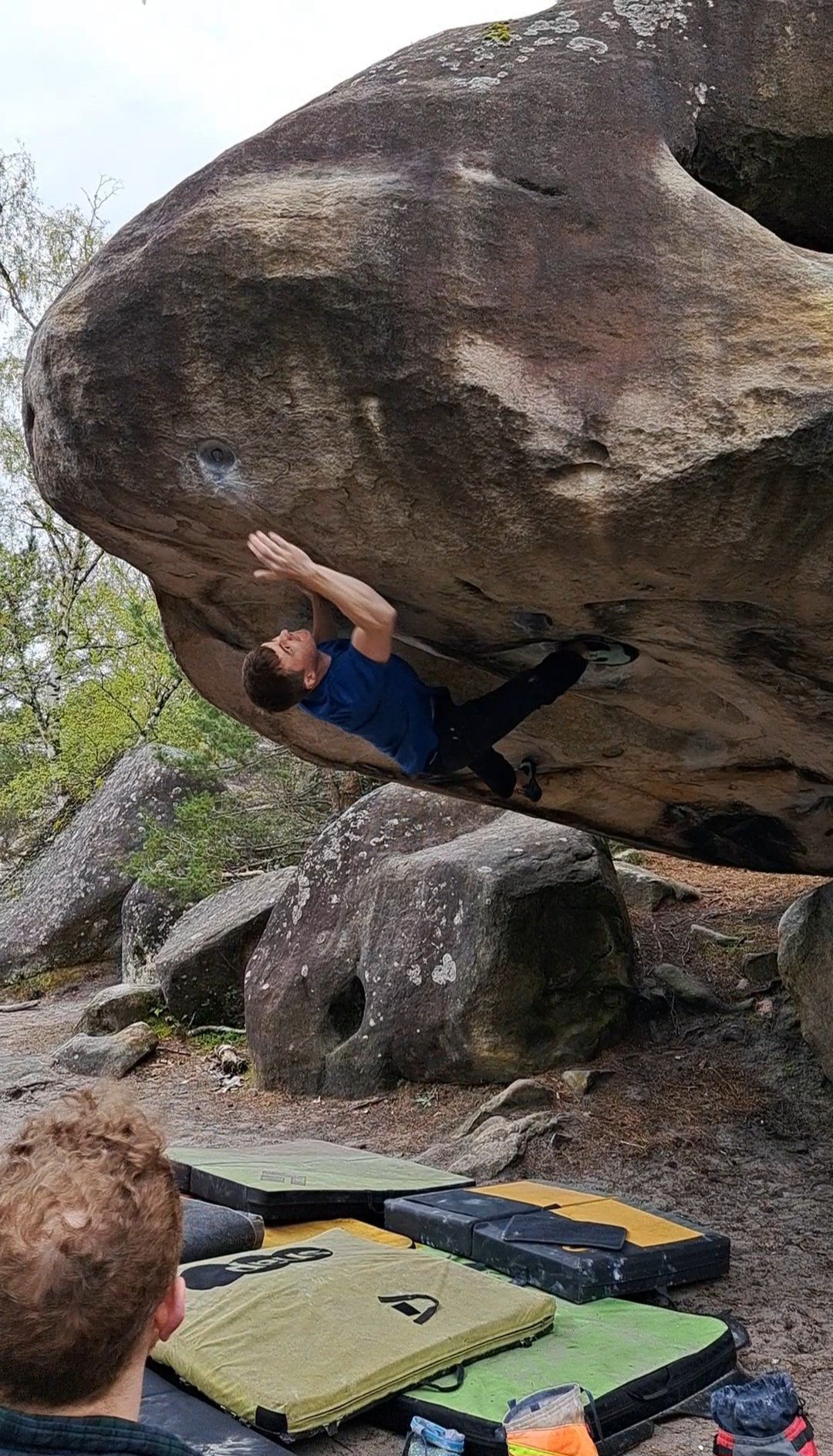
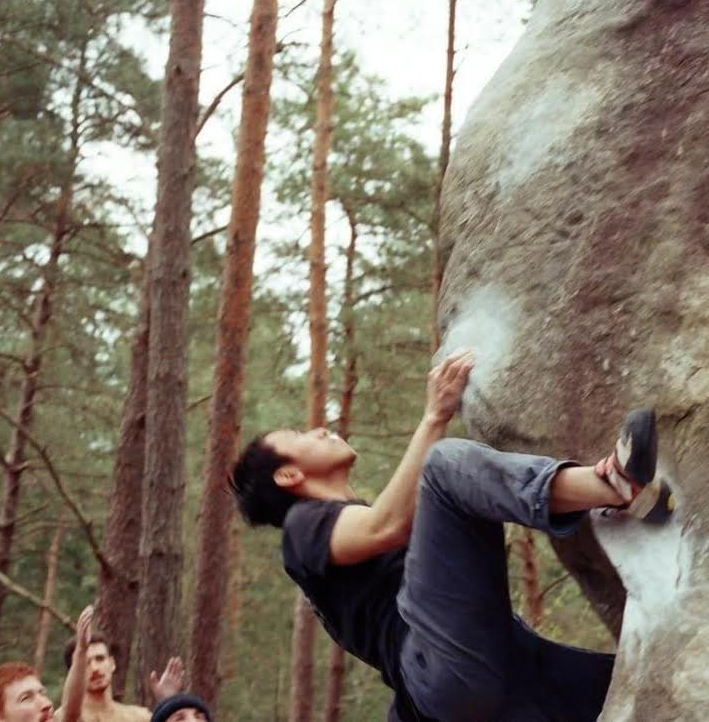
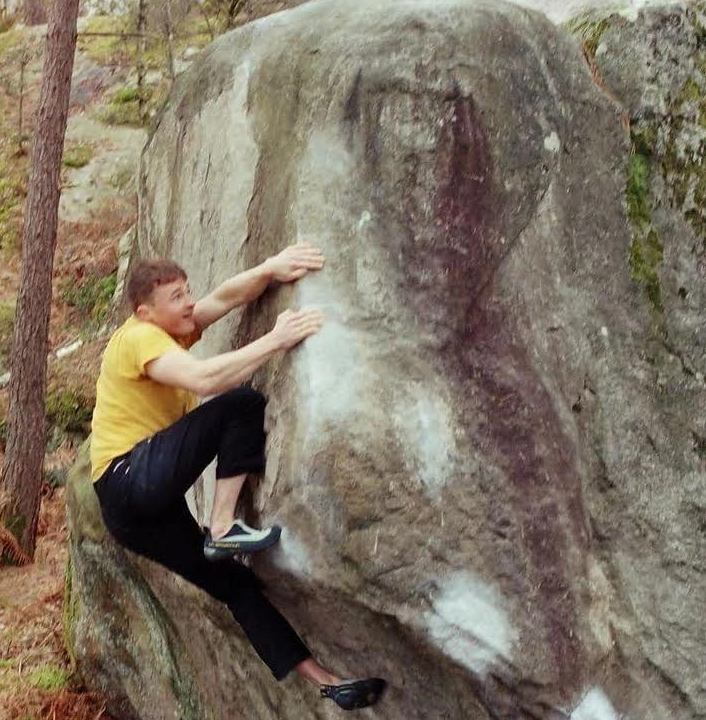
Fontainebleau – Font is one of the absolute legends of bouldering locations. Rolling hills dotted with hundreds of sandstone boulders, Font has been at the centre of the outdoor bouldering scene since the 70’s. Font is unique in the way of texture and top outs, the majority of routes here are slopey wrestles with seal-like mantles. The rock texture is rough to skin but mostly openhanded with a few crimps along the way.
Much like other sandstone locations, it is recommended that you clean your shoes before climbing, brush minimally and avoid climbing when the rock is wet.
Conditions; Font can be enjoyed all year round, typically people opt for spring or autumn but winter can also deliver good conditions, although it can get extremely cold so keep an eye in the forecast. If you do happen to get rained off, take the opportunity to explore the local area, there are plenty of museums, restaurants and other places to see.
The Cuttings Boulder Field:
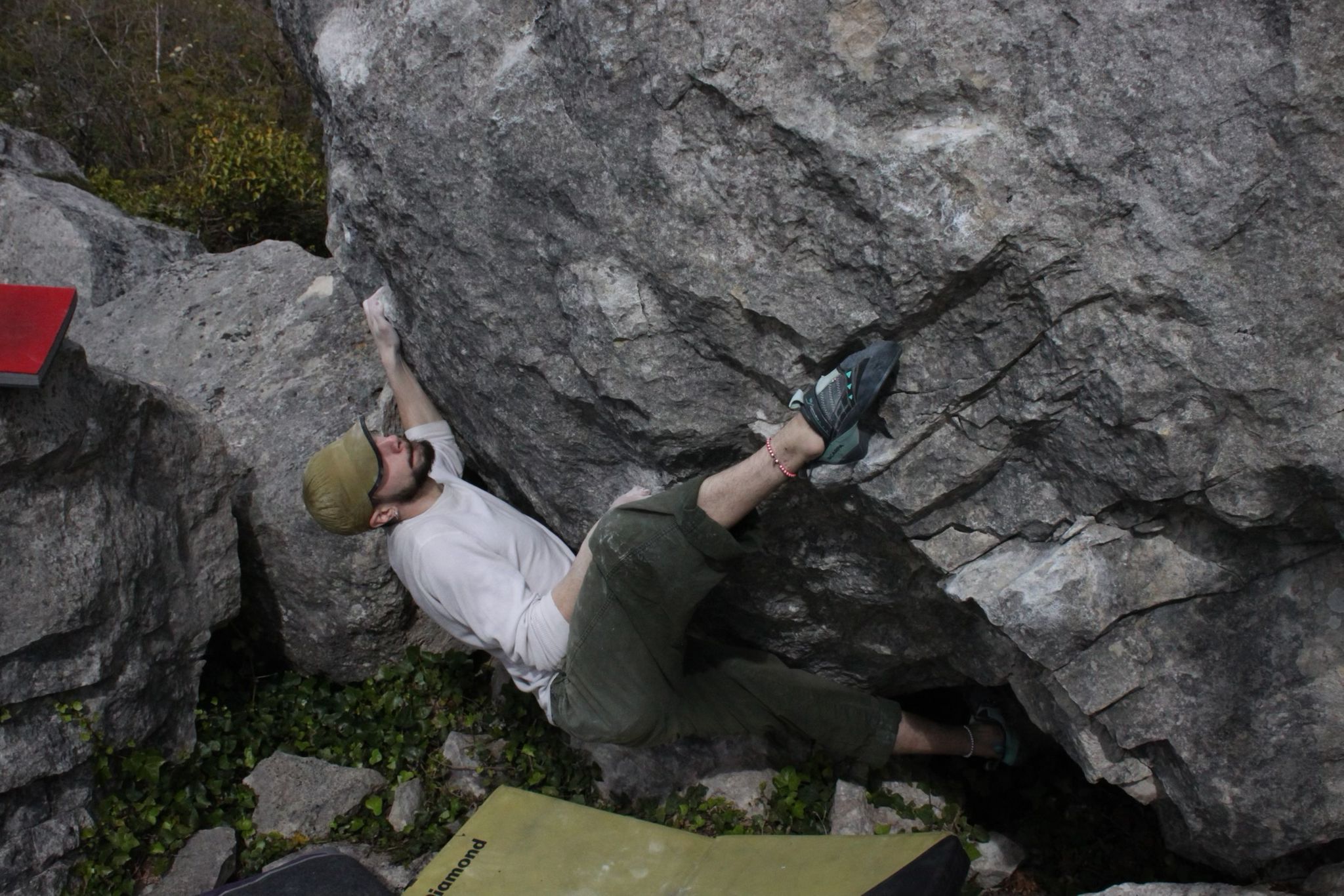
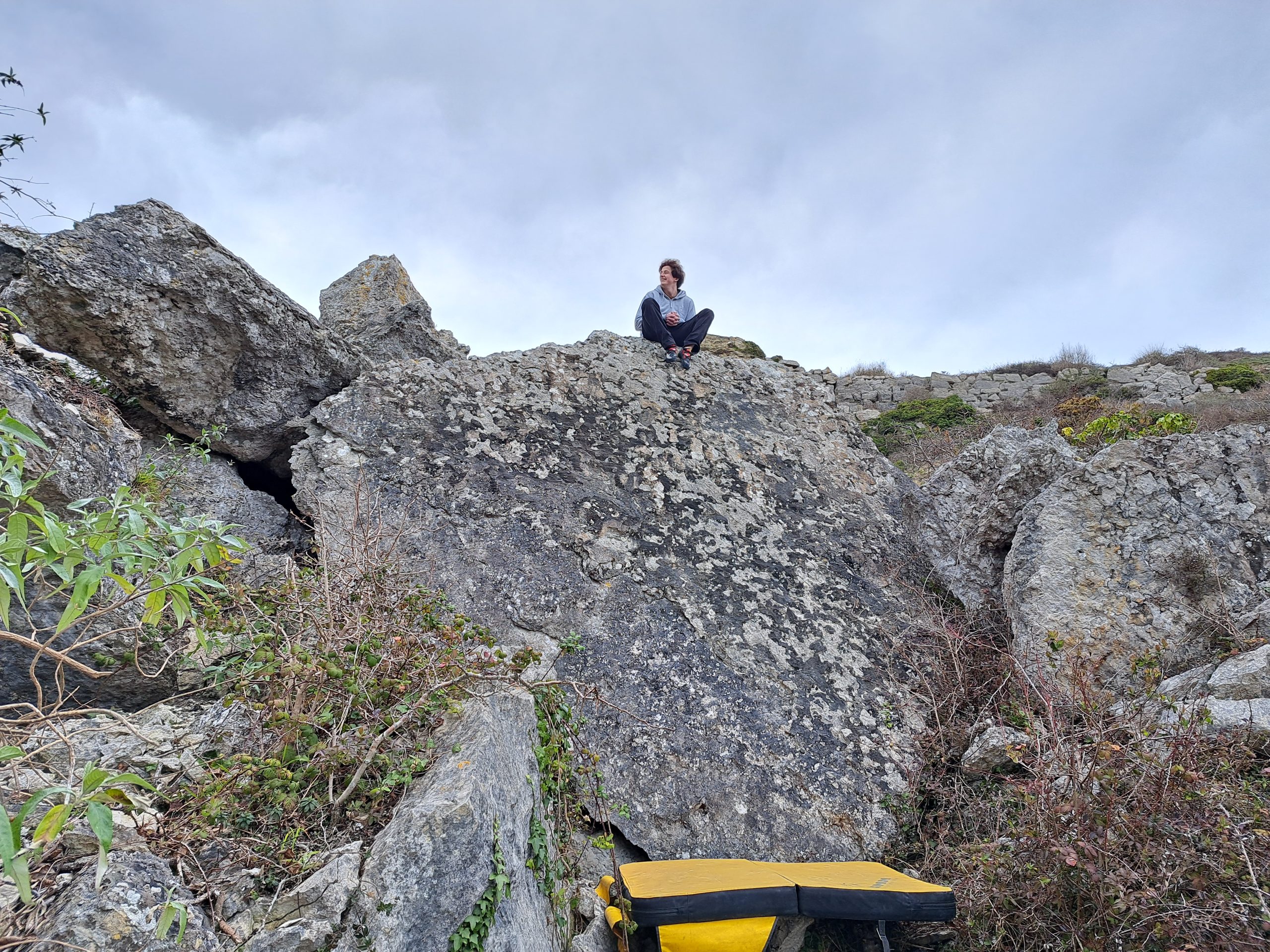
Sally in the Woods:
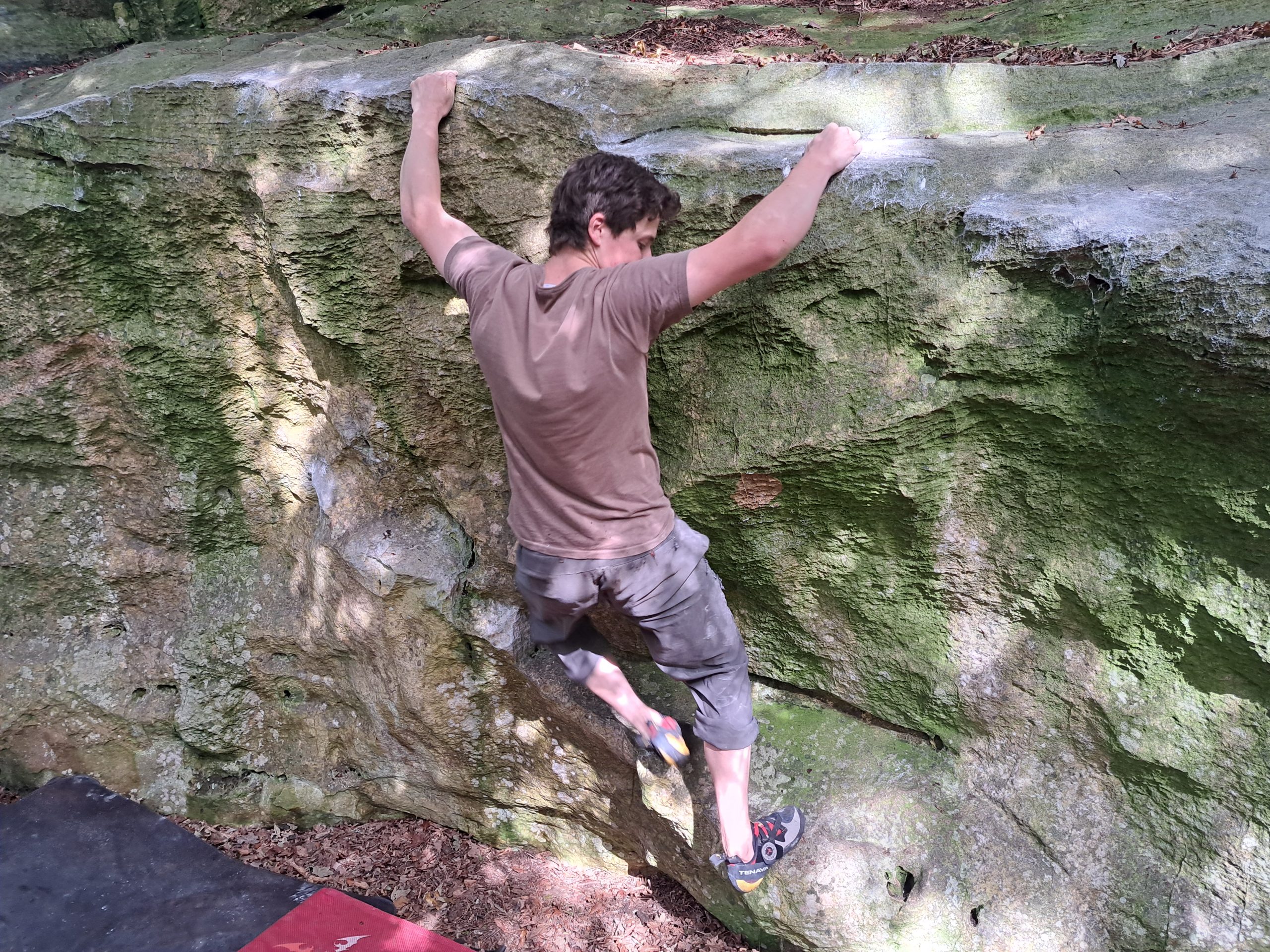
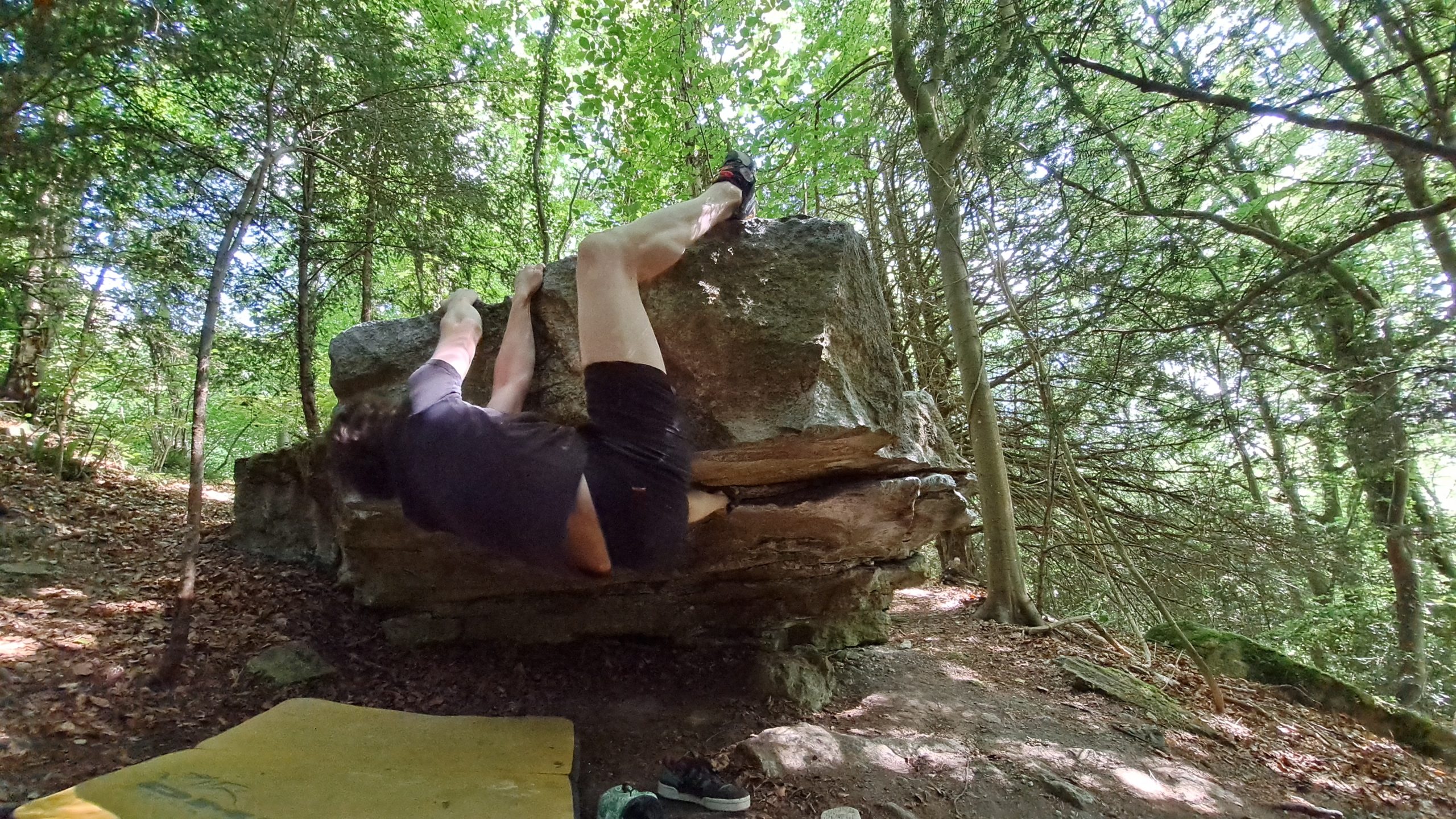
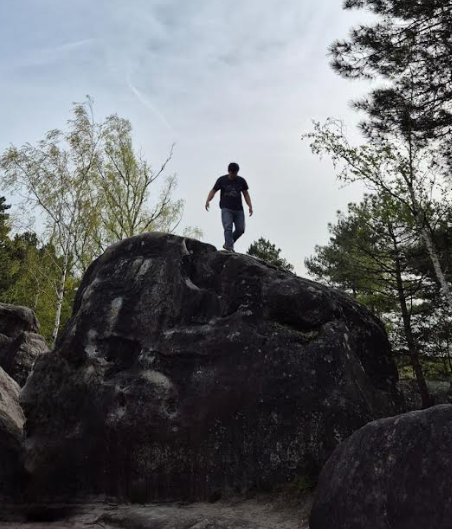
Fontainebleau:
Lets discuss equipment and warming up!
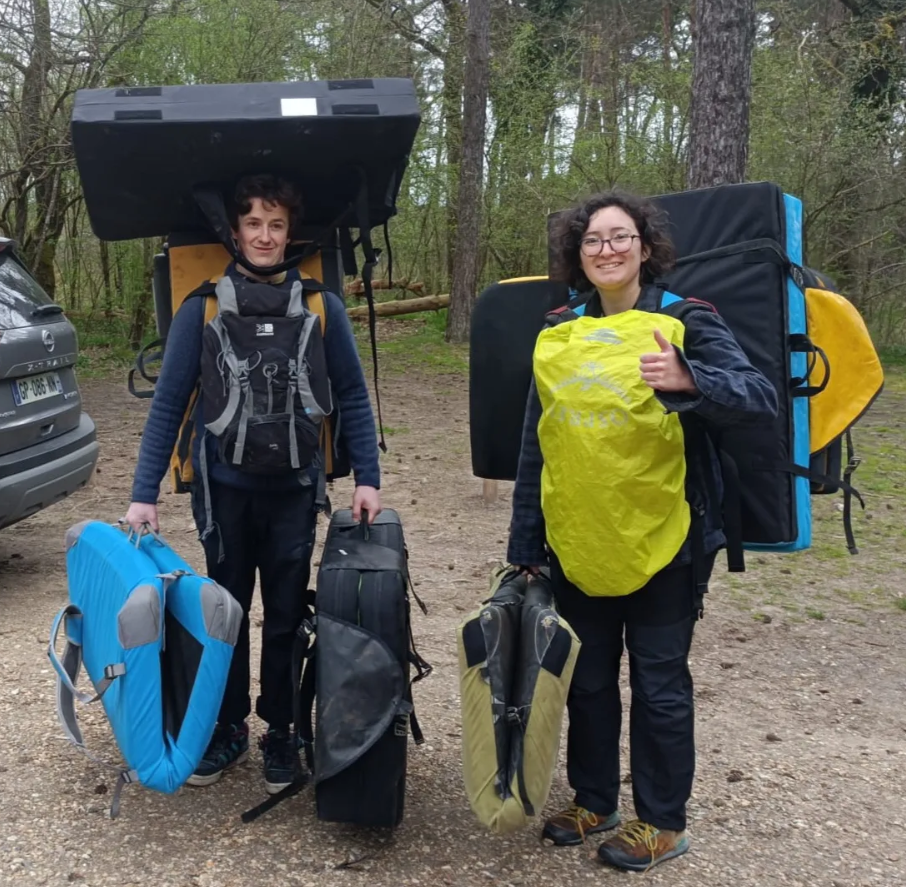
The most important piece of equipment you will need when outdoor bouldering is without a doubt, bouldering pads! They are essential to minimise the risk of injury if you take a fall or have to jump off your boulder although, they don’t reduce the risk to zero.
If you are planning a trip but don’t have any pads, some locations have climbing shops/cafe’s nearby that sell or hire out pads, its always worth checking! (Its also important to note we hire out bouldering pads! Just call or speak to a member of staff if this would be of use to you!).
Other useful items to bring include;
- Chalk
- Tape
- Chalk brush
- Cloths to clean your shoes (depending on location)
- Portable finger board
- Resistance band
- First aid kit
- Lunch and plenty of water
It is important to warm up regardless of where you’re climbing, even more so if you’re out in the cold. Warming up properly reduces the risk of injury and helps you get more out of your session as your muscles and joints are more prepared for the stain of climbing.
Lastly, lets talk about etiquette of climbing outdoors!
It is important to remember that the outdoors is there for everyone to enjoy, and we should do out best to look after it. Whether that means making sure we take home all our litter and bin it properly, or take the extra time to wipe off our shoes before pulling on to the rock, we want to preserve these places so that they can be enjoyed for longer.