News
How to Read a Route
Reading a climbing route is an essential skill for every climber, whether you’re a novice or a seasoned pro. Follow our top…
Reading a climbing route is an essential skill for every climber, whether you’re a novice or a seasoned pro.
Follow our top tips for mastering this skill. Don’t forget our expert team is always on hand to offer advice and assistance.
-
Start from the Ground Up
Before you even touch the wall, spend some time observing the route from the ground. Look at the starting holds and trace the line of the route with your eyes, all the way to the top. This initial inspection helps you get an overall sense of the route’s structure.
-
Identify Key Holds
Look for the key holds that will be crucial for your progress. These include handholds and footholds that will support your weight during critical moves. Pay attention to their shape, size, and orientation.
-
Visualise the Moves
Try to visualise yourself climbing the route. Picture the sequence of moves you’ll need to make from one hold to the next. Consider the body positions, hand and foot placements, and any dynamic moves or static holds.
-
Plan Your Rest Points
It’s essential to identify potential rest points, especially on longer routes. Look for larger holds or areas where you can shake out your arms and recover before tackling the next section.
-
Check for Cruxes
The crux is the hardest part of the route. Locate it and plan how you’ll approach it. Think about the specific moves and techniques you’ll use to overcome this challenging section.
-
Consider the Route’s Flow
Think about the route’s overall flow and rhythm. Is it steady and consistent, or does it have sudden changes in difficulty? Understanding the flow helps you pace yourself and manage your energy efficiently.
-
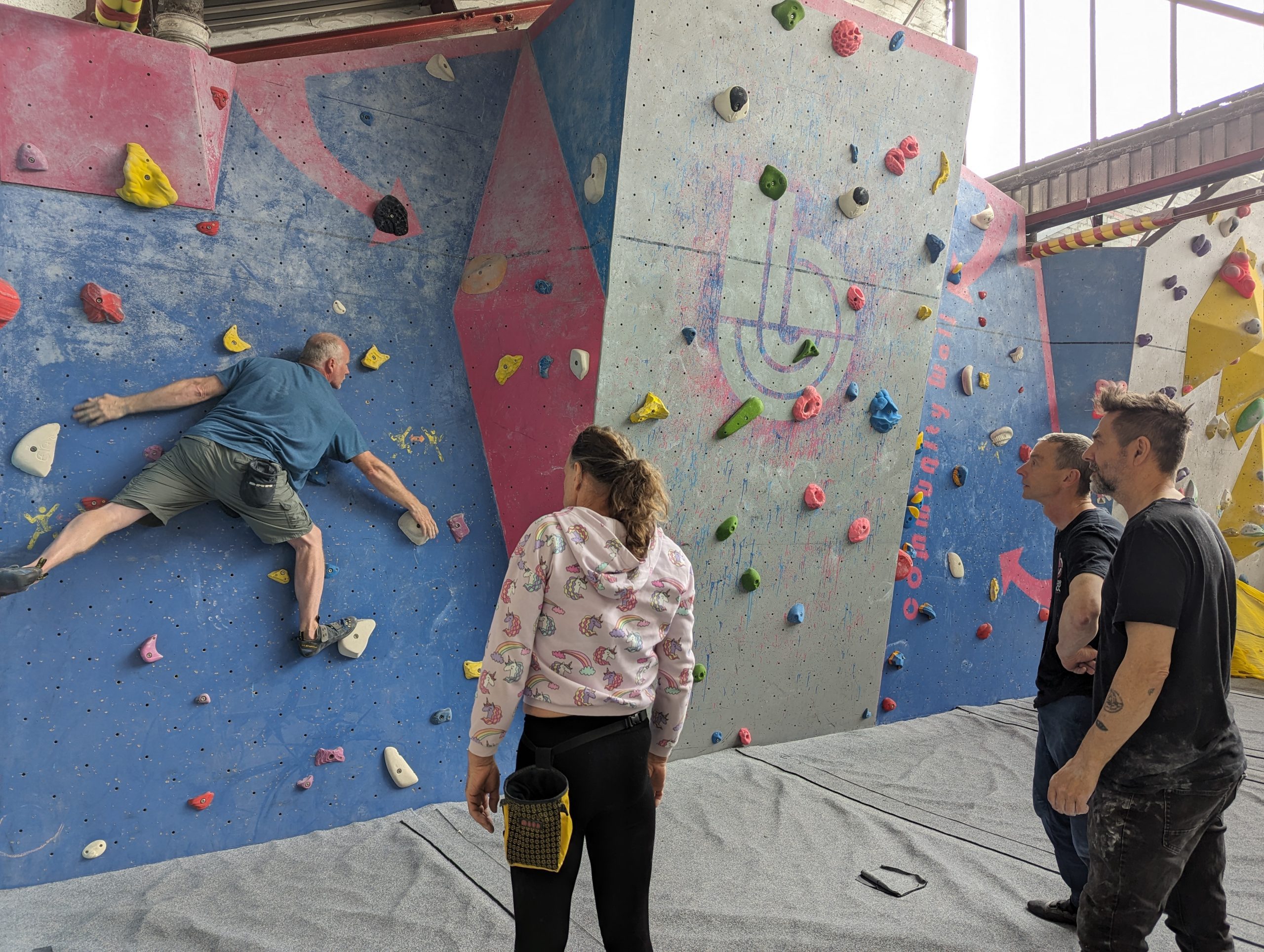
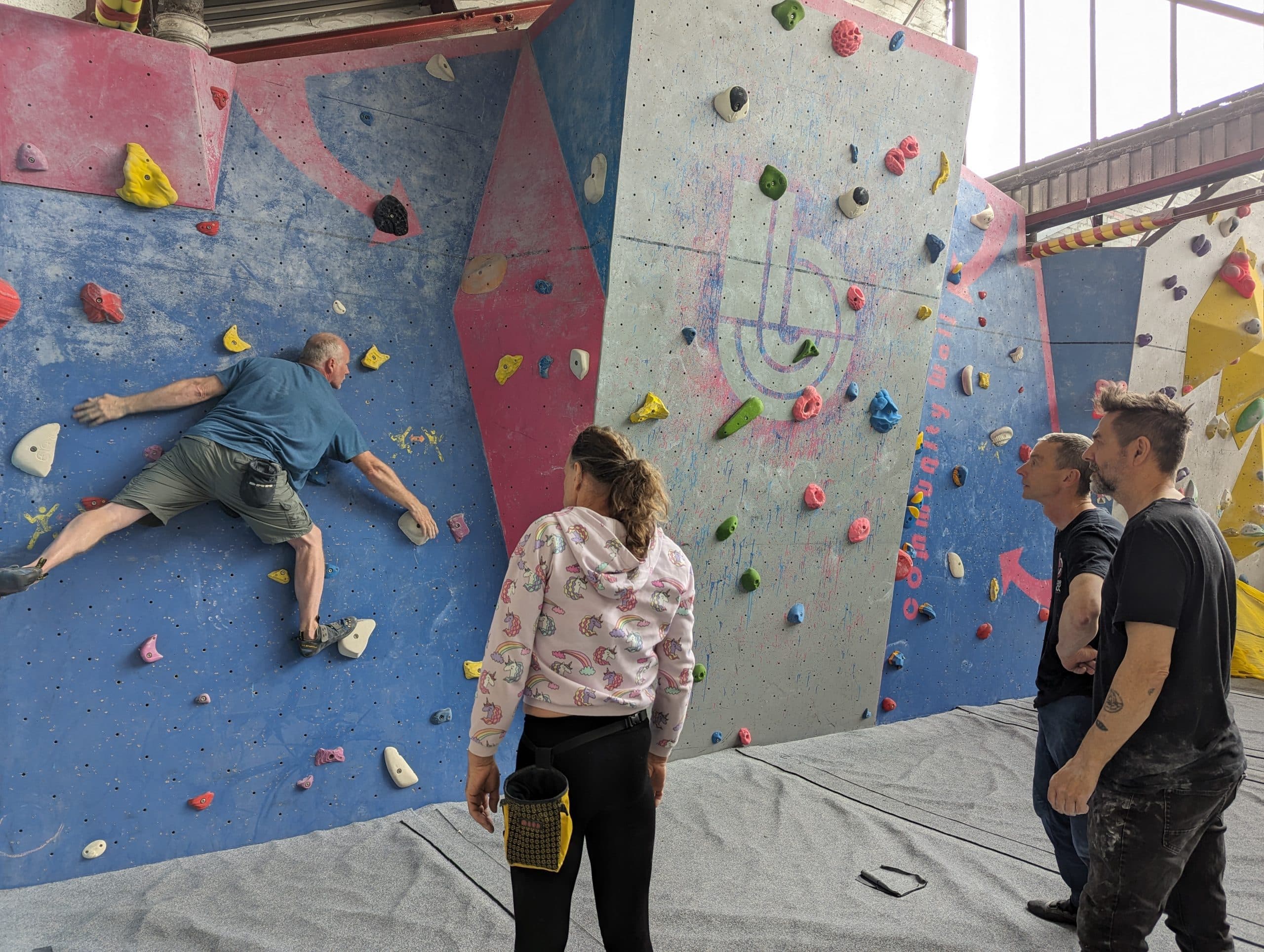
Watch Others Climb
If possible, observe other climbers on the same route. Pay attention to their techniques, body positions, and any struggles they encounter. You can learn a lot from watching others, even if they have a different climbing style.
-
Warm-Up Properly
Make sure you’ve warmed up before attempting a route. A proper warm-up reduces the risk of injury and helps you perform at your best.
-
Be Adaptable
Sometimes, things don’t go as planned. Be ready to adapt your strategy if a particular move doesn’t work out. Flexibility and creativity can help you overcome unexpected challenges.
-
Trust Your Instincts
Finally, trust your instincts and listen to your body. Sometimes, the best way to read a route is by feeling it out as you climb. Stay aware of your body’s feedback and adjust accordingly.
Reading a route is an ongoing learning process. The more you practice, the better you’ll become.
At Boulder Shack, we’re committed to helping you reach new heights in your climbing journey. Join us for training sessions, private tuition, coaching and climbing adventures!
Follow our Facebook and Instagram pages for all our latest events and offers.